
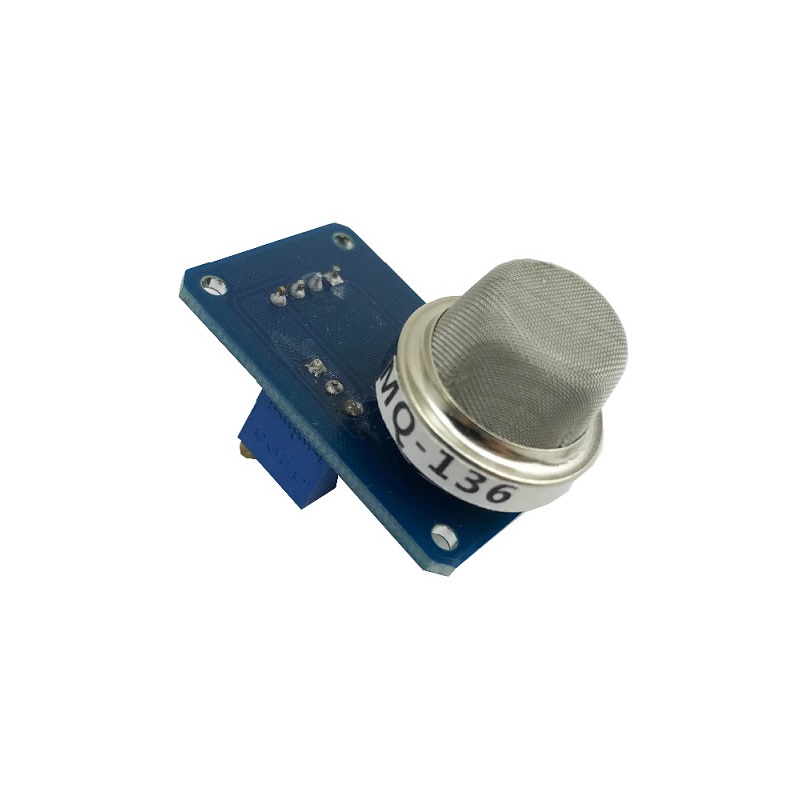
MQ-136-Hydrogen Sulfide Gas Sensor

Ask Our AI Assistant

Product Image
Working Principle

Description

The MQ-136 Hydrogen Sulfide Gas Sensor operates based on the change in conductivity of SnO2 (Tin Dioxide) when exposed to hydrogen sulfide gas. In clean air, SnO2 has lower conductivity. As the concentration of hydrogen sulfide increases, the conductivity of the sensor also increases. This change in conductivity is converted into a corresponding output signal indicating the gas concentration.

Sensor Types

MQ-136

Dos And Donts

Donts

  • Expose To High Temperatures: Avoid exposing the sensor to high temperatures which may damage or degrade the sensor.,
  • Use For Other Gases: Do not use the MQ-136 sensor for detecting gases other than hydrogen sulfide, as it is specifically designed for H2S and may not accurately detect other gases.

Dos

  • Use In Ventilated Areas: Ensure the sensor is used in well-ventilated areas to avoid saturation.,
  • Regular Calibration: Calibrate the sensor regularly to maintain accuracy.,
  • Use Appropriate Power Supply: Ensure the sensor is powered with the correct voltage as per specifications.
Limits

Gas Concentration

  • Description: The sensor is designed to detect hydrogen sulfide gas concentrations effectively, with an analog output ranging from 0 to 5V corresponding to increasing concentrations.
How To Connect

Microcontroller Connection

  • Description: Connect the TTL output to a microcontroller. The TTL output gives a low signal when hydrogen sulfide is detected. The analog output can also be connected to an ADC (Analog to Digital Converter) of a microcontroller to read varying concentrations.
Dimensions

Height

24 mm

Length

29 mm

Shipping Dimensions

3 × 3 × 2 cm

Shipping Weight

0.010 kg

Weight

8 g

Width

19 mm